
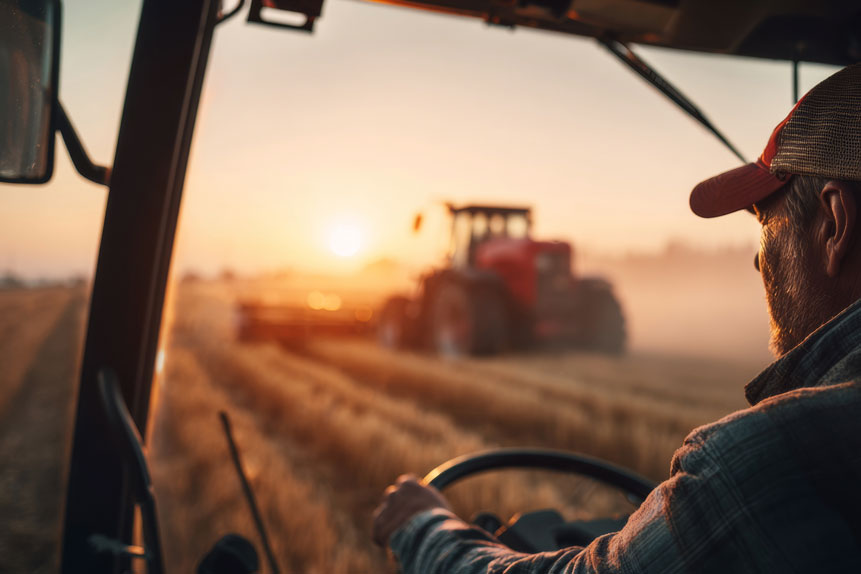
Modern grain farming equipment has transformed how farms plant, harvest, store, and manage grain. From GPS-guided tractors and precision planters to high-capacity combines and advanced grain storage equipment, today’s producers rely on machinery and digital tools to work more efficiently, reduce downtime, and protect every bushel.
Whether you operate a family farm or a large commercial grain operation, choosing the right grain farm equipment can improve productivity across the entire growing season. The right equipment mix helps you make better decisions, move faster during narrow weather windows, and keep your operation organized from planting through storage.
In this guide, you’ll learn:
- The essential grain farming equipment used throughout the growing season
- How grain harvesting equipment improves efficiency and reduces losses
- Why grain storage equipment protects crop quality and profitability
- How maintenance and record keeping reduce costly downtime
- How digital technology is changing modern grain farming
If you’re new to the industry or want a broader look at today’s agricultural practices, start with An Overview of Modern Grain Farming before exploring the equipment that powers modern operations.
Essential Grain Farming Equipment Every Farm Needs
Every grain operation relies on equipment that performs reliably day after day. While each farm has different needs, the goal is the same: maximize productivity, protect crop quality, and minimize downtime during critical windows.
Common categories of grain farming equipment include:
- Tractors
- Air seeders and planters
- Sprayers
- Combines
- Grain carts
- Grain trucks
- Grain bins
- Grain dryers
- Augers and conveyors
- Equipment trailers
Tractors and combines often get the most attention, but support equipment such as grain carts, dryers, augers, conveyors, and storage bins can be just as important. The best setup depends on your acreage, crop type, labor availability, storage needs, and long-term business goals.
Essential Grain Farming Equipment Comparison
| Equipment | Primary Purpose | Best Time to Use | Key Benefits |
|---|---|---|---|
| Tractor | Powers and pulls farm implements | Year-round | Versatile, powerful, and essential for most field tasks |
| Air Seeder / Planter | Plants grain crops with precision | Spring planting | Improves seed placement, spacing, and emergence |
| Sprayer | Applies herbicides, fungicides, and fertilizers | Growing season | Protects crops while reducing input waste |
| Combine Harvester | Harvests mature grain crops | Harvest season | Increases harvest speed and reduces grain loss |
| Grain Cart | Moves harvested grain from combines | Harvest season | Keeps combines moving and improves harvest flow |
| Grain Truck | Transports grain to storage or market | Harvest and transport | Supports fast, efficient grain movement |
| Grain Bin | Stores harvested grain safely | Year-round | Protects quality and extends storage life |
| Grain Dryer | Reduces grain moisture | Harvest season | Prevents spoilage and improves storage quality |
| Auger / Conveyor | Moves grain between storage systems | Year-round | Speeds up handling and reduces manual labor |
The most valuable piece of grain farming equipment is not always the newest. It is the one that is properly maintained, ready when you need it, and helps your operation run efficiently.
Jordan Hart – Modern Farmers
Why Tractors Are Essential to Grain Farming
The tractor remains the backbone of nearly every grain operation. From field preparation and spring planting to spraying, hauling, and harvest support, tractors power many of the implements that keep a farm moving.
Modern tractors combine horsepower with precision technology, making them one of the most important investments in modern farming equipment. Today’s models often include:
- GPS guidance
- Auto-steering
- Precision agriculture systems
- Fuel efficiency monitoring
- Hydraulic implement control
- Real-time diagnostics
These features help operators cover more acres, reduce overlap, improve accuracy, and lower input costs.
Grain Farming Equipment for Planting Success
Planting is one of the most important stages of the season. Air seeders and planters help place seed at consistent spacing and depth, improving emergence and giving each crop the strongest possible start.
Many farms now use planting equipment with:
- Variable-rate seeding
- GPS mapping
- Automatic section control
- Population monitoring
- Precision fertilizer placement
These tools help maximize seed investment, reduce waste, and turn planting into a more precise, data-driven process.
Sprayers Help Protect Crop Health
Healthy crops require careful management throughout the growing season. Modern self-propelled and pull-type sprayers allow farmers to apply herbicides, fungicides, and fertilizers with greater accuracy.
Advanced sprayers may include:
- Automatic boom control
- Variable-rate application
- GPS guidance
- Drift reduction technology
- Individual nozzle control
Using the right modern farming equipment helps reduce chemical waste, minimize overlap, improve crop performance, and support better environmental stewardship.
Essential Grain Harvesting Equipment for a Successful Harvest
Harvest is often the busiest and most time-sensitive part of the year. Reliable grain harvesting equipment helps producers bring crops in quickly, efficiently, and with minimal grain loss before weather affects quality.
Essential harvesting equipment includes:
- Combines
- Grain headers
- Corn headers
- Grain carts
- Grain trucks
- Portable augers
Today’s grain harvesting equipment is built for both speed and accuracy. Features such as yield mapping, moisture sensors, GPS guidance, automated adjustments, and performance monitoring help operators make informed decisions while reducing fuel use and crop losses.
Modern combines can continuously monitor:
- Yield
- Moisture
- Crop loss
- Fuel consumption
- Engine performance
Did You Know? Even a small reduction in harvest losses can translate into thousands of additional bushels over the course of a season.
Why Grain Storage Equipment Matters After Harvest
Harvesting grain is only half the job. Without proper grain storage equipment, months of work can be lost to moisture, mold, insects, or poor ventilation. Modern storage systems help preserve grain quality while giving producers more flexibility to market crops when conditions are favorable.
Common storage systems include:
- Steel grain bins
- Hopper bins
- Grain dryers
- Aeration fans
- Temperature monitoring systems
- Moisture sensors
- Conveyors
- Bucket elevators
Many farms now use temperature cables, moisture monitoring systems, and automated aeration controls to track stored grain more consistently. These tools reduce spoilage risk and help maintain crop value throughout the storage season.
Grain Farm Equipment Maintenance Best Practices
Preventive maintenance extends equipment life, improves resale value, and reduces unexpected downtime during planting and harvest. A clear maintenance schedule helps ensure every machine is field-ready when conditions are right.
A preventive maintenance plan should include:
- Engine oil changes
- Hydraulic inspections
- Tire pressure checks
- Bearing lubrication
- Belt inspections
- Filter replacements
- Engine diagnostics
- Digital maintenance logs
Small maintenance tasks today often prevent expensive repairs tomorrow.
Common Grain Farming Equipment Mistakes to Avoid
Even the best grain farming equipment requires planning, maintenance, and proper operation. Avoiding these common mistakes can help protect your investment and keep your operation running efficiently.
1. Skipping Routine Maintenance
Regular maintenance is one of the easiest ways to extend the life of your grain farm equipment. Ignoring oil changes, worn belts, bearings, or hydraulic issues can lead to costly repairs during critical planting or harvest windows.
2. Improper Grain Storage
Your harvest is not fully protected until it is safely stored. Using the right grain storage equipment, monitoring moisture levels, and maintaining proper airflow helps prevent spoilage, mold, and insect damage.
3. Ignoring Grain Moisture Levels
Harvesting or storing grain at the wrong moisture content can reduce crop quality and increase storage risk. Moisture meters and grain dryers are essential tools for protecting the value of your crop.
4. Waiting Until Harvest to Repair Equipment
Harvest is not the time to discover mechanical problems. Inspect combines, grain carts, augers, and other grain harvesting equipment well before the season begins to avoid expensive downtime.
5. Not Tracking Maintenance History
Detailed maintenance records make it easier to schedule service, identify recurring problems, and improve the long-term reliability of your modern farming equipment. Digital record keeping also helps ensure important tasks are not overlooked during busy seasons.
Pro Tip: A few hours spent inspecting and maintaining equipment before the season starts can save days of downtime when every hour in the field counts.
How Technology Is Transforming Grain Farming
Today’s farms generate more operational data than ever before. From GPS guidance and yield maps to maintenance records and grain inventory, digital tools help farmers organize information that was once scattered across notebooks, spreadsheets, and filing cabinets.
Farmers now rely on software and mobile apps to manage equipment, inventory, grain bins, contracts, maintenance schedules, and field records from virtually anywhere.
Modern digital tools allow producers to:
- Track grain inventory
- Monitor storage levels
- Schedule equipment maintenance
- Record repairs
- Organize documents
- Access farm data remotely
- Reduce paperwork
- Improve team communication
Technology does not replace farming experience. It supports better decisions.
How to Choose the Right Grain Farm Equipment
Purchasing grain farm equipment is a long-term investment. Consider more than the purchase price: maintenance costs, fuel efficiency, replacement parts, dealer support, equipment compatibility, and long-term return on investment all matter.
Before purchasing new equipment, consider:
- Farm size
- Crop rotation
- Labor availability
- Storage capacity
- Equipment compatibility
- Dealer support
- Maintenance costs
- Long-term return on investment
The most expensive machine is not always the best investment. Choose equipment that improves efficiency, fits your operation, and supports your budget over the long term.
Building a Smarter Farm Operation
A successful grain operation depends on more than horsepower. It also requires accurate information, organized records, preventive maintenance, efficient workflows, and clear visibility into costs.
When equipment, inventory, maintenance, and farm records work together, daily operations become easier to manage. Producers can spend less time searching for paperwork and more time making informed decisions that improve profitability year after year.
Final Thoughts
Investing in reliable grain farming equipment, maintaining it properly, and using modern digital tools can improve productivity throughout every season. Whether you are upgrading grain harvesting equipment, expanding your grain storage equipment, or organizing maintenance records, every improvement helps build a more efficient and profitable farm.
The goal is not simply to own more machinery. It is to make every piece of modern farming equipment work together as part of a smarter, more organized operation.
Learn more about grain farming best practices by visiting Modern Farmers.